Trentemøller presenta «Terrified», primer adelanto de su nuevo álbum
agosto 28, 2026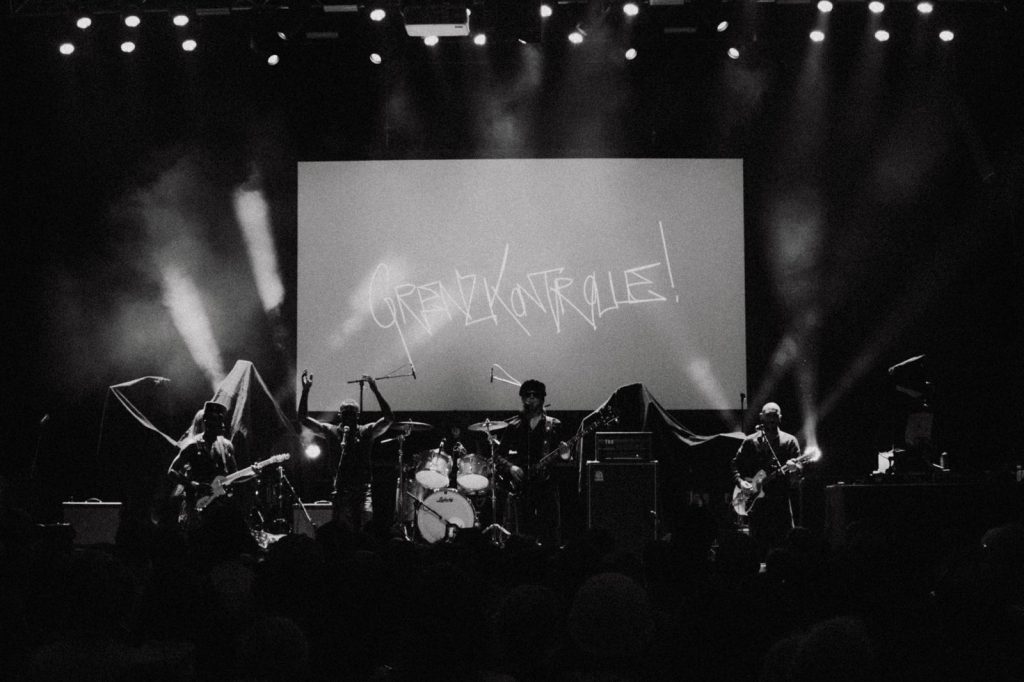
Texto: Ruth G. Núñez de Arenas // Fotos: đào bình minh (@ichbing_)
English bellow
Llevo ya varios años viviendo en Berlín y he asistido a muchísimos conciertos de bandas de todo tipo y de los estilos musicales más diversos en esta ciudad. Sin embargo, el Pop-Kultur Festival siempre había estado en mi radar como una asignatura pendiente. Año tras año, me impactaba su inmensa variedad cultural, pero nunca terminaba de cruzar sus puertas. Hasta que apareció un nombre en el cartel que me obligó a solicitar una acreditación de prensa para asistir: GRENZKONTROLLE.
Lo poco que había escuchado de esta banda de Colonia me había atrapado, pero nada me preparó para lo que presencié en el Kesselhaus. Fue un descubrimiento total y una de las experiencias más brutales que he vivido en directo en los últimos años.
El magnetismo de Don L. Gaspár Ali y la magia de Kodia
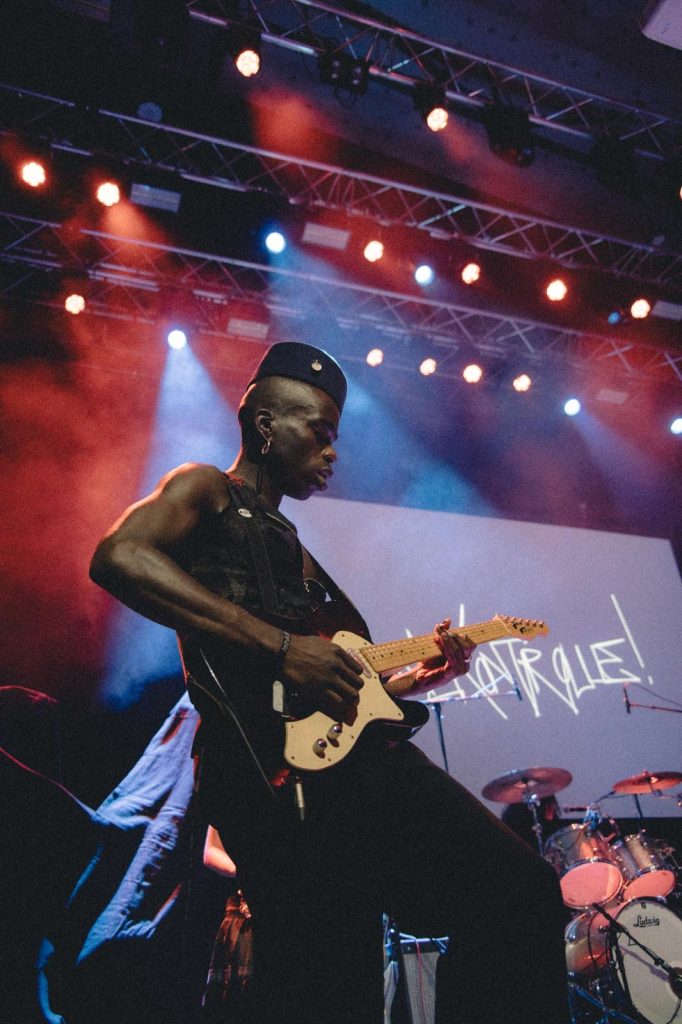
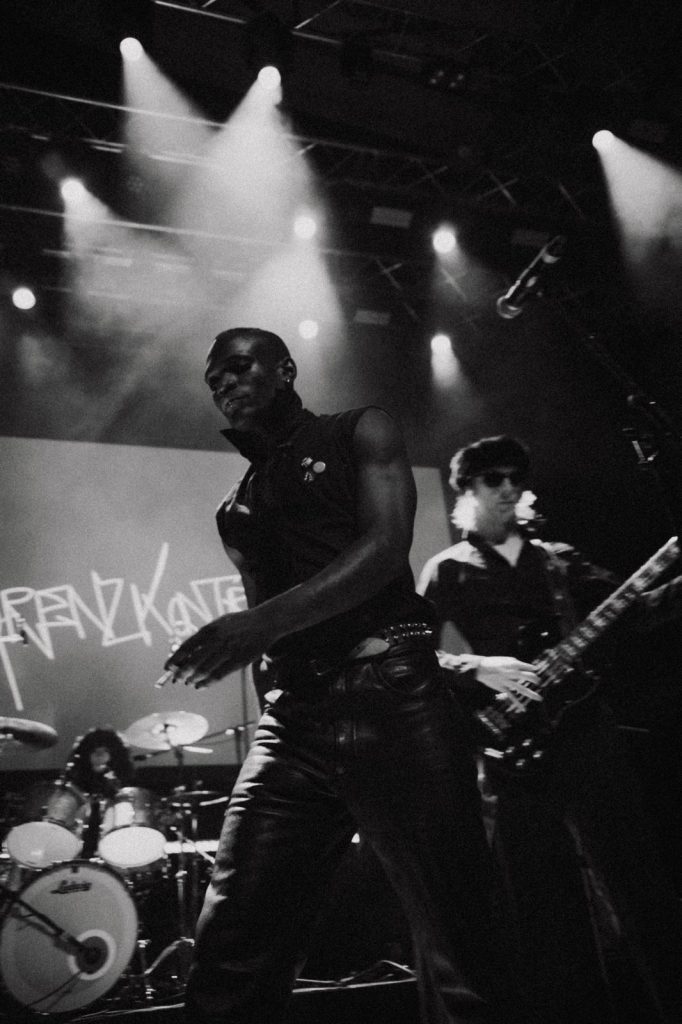
Cuando el grupo se subió al escenario, la atmósfera cambió por completo. Tienen una personalidad arrolladora y un sonido impecable, nítido y demoledor. Gran parte de la culpa la tiene su vocalista, Don L. Gaspár Ali. Su actitud sobre las tablas te vuela la cabeza desde el primer segundo: desborda una energía salvaje que te atraviesa, te envuelve y te mete de lleno en el show. Don derrocha una chulería magnética de “chico malo”, pero en cuanto arranca la distorsión, sus movimientos mutan hacia un trance oscuro que evoca directamente a Ian Curtis. Energía y magnetismo en estado puro.
A su lado, los movimientos, el baile y la clase suprema de Kodia con la guitarra capturaron todas las miradas, aportando un carisma magnético que contagiaba a toda la sala. Su propuesta funciona a la perfección al fusionar el post-punk con el descaro y la actitud de la Nueva Ola Alemana (NDW). Pero GRENZKONTROLLE es mucho más que una banda con una presencia escénica arrolladora. Su diversidad no es un elemento decorativo ni una simple característica de su formación: forma parte de un discurso artístico que habla de identidad, pertenencia, comunidad y resistencia.
Derribando muros
No resulta casual que una banda llamada Grenzkontrolle, “control fronterizo”, dedique buena parte de su energía a derribar fronteras. Y eso es exactamente lo que ocurrió la noche del pasado viernes. Lo que realmente me impactó de Grenzkontrolle, por encima de los muchos directos que he visto en Berlín, es la energía de comunión y de unión absoluta que destilan y que consiguen crear a través de la música. La banda nos hizo partícipes de su catarsis en todo momento, rompiendo cualquier barrera entre escenario y pista.
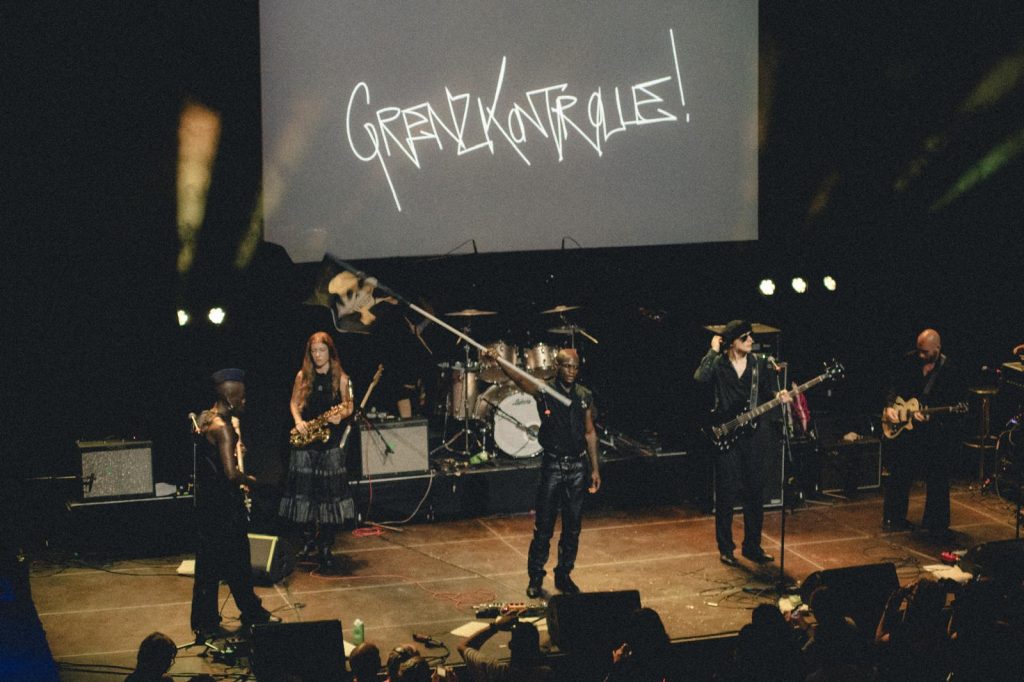
Se armó un pogo cargado de adrenalina pero increíblemente ordenado, seguro y respetuoso. El ambiente era tan sano que incluso había niños en el concierto, infantes disfrutando de una experiencia que seguro recordarán toda su vida. El clímax de esta conexión llegó cuando nos guiaron a todos para sentarnos en el suelo durante dos de sus temas más intensos. Estar allí abajo, sintiendo la vibración del suelo del Kesselhaus antes de explotar de nuevo en saltos, fue algo mágico. Por si fuera poco, en un momento del show sacaron una bandera pirata gigante y la ondearon sobre el escenario, desatando la locura colectiva y sellando una puesta en escena visualmente espectacular.
Pero esa comunión no era solamente física. También había un mensaje detrás. GRENZKONTROLLE no entiende el punk como una pose, sino como una herramienta para intervenir en el presente. Sus canciones hablan de racismo, discriminación, precariedad, vivienda, polarización política y crisis climática; y la propia banda ha convertido la necesidad de tomar posición frente al avance de la derecha y del pensamiento autoritario en uno de los ejes de su discurso.
Durante el concierto, esa actitud política dejó de ser un concepto abstracto para convertirse en algo colectivo. La banda animó al público a tomar partido y a no permanecer pasivo ante el auge del fascismo y de las posiciones ultraconservadoras. Y lo hizo de la manera más efectiva que puede hacerlo una banda de punk: convirtiendo el mensaje en energía, movimiento y comunidad. Una comunidad diversa, abierta y absolutamente entregada.
Ahí es donde el concepto de Grenzkontrolle adquiere todo su sentido. Se llaman “control fronterizo”, pero lo que hicieron aquella noche fue precisamente lo contrario: derribar fronteras. Entre el escenario y la pista. Entre la banda y el público. Entre personas diferentes. Entre quienes llegan a un concierto como espectadores y quienes salen de él sintiéndose parte de algo. Y quizá esa sea una de las grandes virtudes de GRENZKONTROLLE: su discurso político no se siente impuesto desde arriba. Se experimenta desde dentro.
Grenzkontrolle no hace música para ser consumida de fondo; hacen himnos nacidos para sacudirte el cuerpo. Su directo tiene algo profundamente punk en el sentido más genuino de la palabra: no necesitas permiso, no necesitas encajar, no necesitas ser perfecto. Sólo necesitas estar ahí, formar parte y decidir qué posición quieres ocupar. Un huracán indomable, sí, pero que en lugar de levantar muros, los derriba.
An Unstopable Hurricane Called GRENZKONTROLLE
I have been living in Berlin for several years now, and I have attended countless concerts by bands of all kinds and from the most diverse musical genres in this city. However, Pop-Kultur Festival had always been on my radar as one of those boxes I had yet to tick. Year after year, I was struck by its immense cultural diversity, but I never quite made it through its doors. Until one name on the line-up finally gave me the push I needed to apply for press accreditation: GRENZKONTROLLE.
The little I had heard from this Cologne-based band had captivated me, but nothing prepared me for what I witnessed at Kesselhaus. It was a complete revelation and one of the most brutal live experiences I have had in recent years.
The Magnetism of Don L. Gaspár Ali and the Magic of Kodia
When the band stepped onto the stage, the atmosphere changed completely. They have an overwhelming presence and an impeccable sound: sharp, crystal-clear and devastating. Much of the credit goes to their vocalist, Don L. Gaspár Ali. His stage presence blows your mind from the very first second: he radiates a wild energy that cuts right through you, surrounds you and pulls you headfirst into the show. Don oozes a magnetic bad-boy swagger, but as soon as the distortion kicks in, his movements morph into a dark trance that immediately evokes Ian Curtis. Pure energy and magnetism.
Beside him, Kodia’s movements, dancing and supreme guitar-playing captured every eye, bringing a magnetic charisma that spread throughout the entire room. Their approach works perfectly, blending post-punk with the cheeky attitude and rebellious spirit of the German New Wave (NDW). But GRENZKONTROLLE is much more than a band with an overwhelming stage presence. Their diversity is not a decorative feature or simply a characteristic of their line-up: it is part of an artistic discourse that speaks of identity, belonging, community and resistance.
Tearing Down Walls
It is no coincidence that a band called Grenzkontrolle, “border control,” devotes so much of its energy to tearing borders down. And that is exactly what happened last Friday night.
What really struck me about Grenzkontrolle, above and beyond the many live shows I have seen in Berlin, is the incredible sense of communion and absolute togetherness they radiate and manage to create through their music. The band made us part of their catharsis at every moment, breaking down every barrier between the stage and the audience.
A pogo pit erupted, packed with adrenaline but remarkably organised, safe and respectful. The atmosphere was so wholesome that there were even children at the concert, little ones enjoying an experience they will surely remember for the rest of their lives. The climax of this connection came when the band guided us all to sit down on the floor during two of their most intense songs. Being down there, feeling the vibration of the Kesselhaus floor before everyone exploded back into a frenzy of jumping, was genuinely magical.
And as if that weren’t enough, at one point during the show they brought out a huge pirate flag and waved it across the stage, unleashing collective madness and putting the finishing touch on a visually spectacular performance.
But that sense of communion was not merely physical. There was a message behind it, too. GRENZKONTROLLE do not see punk as a pose, but as a tool for engaging with the present. Their songs speak of racism, discrimination, social insecurity, housing, political polarisation and the climate crisis; and the band itself has made the need to take a stand against the rise of the political right and authoritarian thinking one of the central pillars of its discourse.
During the concert, that political stance stopped being an abstract concept and became something collective. The band encouraged the audience to take a stand and not remain passive in the face of the rise of fascism and ultra-conservative positions. And they did it in the most effective way a punk band can: turning the message into energy, movement and community. A diverse, open and completely committed community.
That is where the concept of Grenzkontrolle acquires its full meaning. They call themselves “border control”, but what they did that night was precisely the opposite: they tore borders down. Between the stage and the audience. Between the band and the crowd. Between people of different backgrounds. Between those who arrive at a concert as spectators and those who leave feeling part of something.
And perhaps that is one of GRENZKONTROLLE’s greatest strengths: their political message never feels imposed from above. You experience it from within.
Grenzkontrolle don’t make music to be consumed as background noise; they make anthems born to shake your body. Their live show has something deeply punk in the truest sense of the word: you don’t need permission, you don’t need to fit in, and you don’t need to be perfect. You simply need to be there, to take part, and to decide what position you want to occupy.
An untameable hurricane, yes, but one that tears walls down instead of building them.